



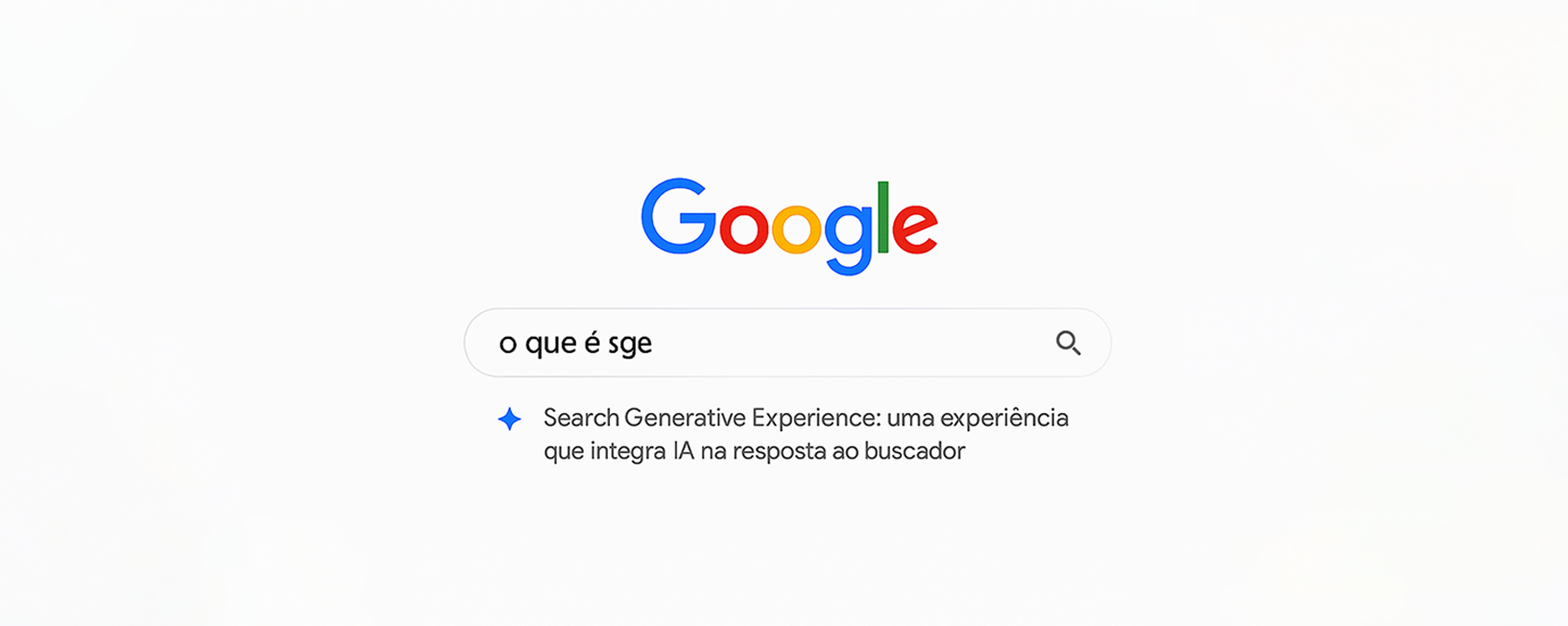
Google SGE is not just a technical update.
It’s a structural change in the way brands are found, interpreted and referenced online.
The integration of generative artificial intelligence into search results changes the traditional balance of SEO. The user no longer just browses lists of links, but receives synthesized, contextualized answers generated by AI.
This doesn’t just mean optimizing content.
It forces us to rethink our digital strategy.
If your organization wants to remain relevant, the first step is not to produce more content. It’s to better structure what you communicate and the territory you want to occupy.
1. What is Google SGE?
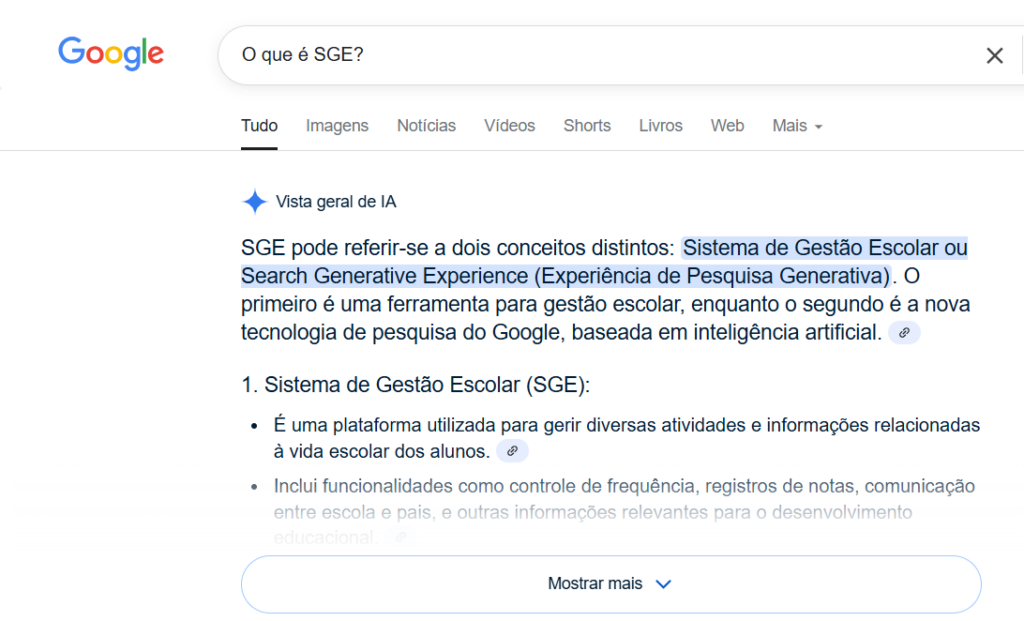
Google SGE (Search Generative Experience) is a new feature that integrates generative artificial intelligence into search results.
Instead of just showing websites, Google is starting to provide AI-generated answers, offering an informative and straightforward summary of the topic searched.
The logic changes: From ranking to interpretation. From click to answer.
2. What really changes?
The impact is not just technical.
With SGE:
- The user gets immediate answers
- The need to click decreases
- The competition is no longer just about position, but about real relevance
The question is no longer “Is it on the first page?”
And it becomes: “Is it considered a reliable source to generate the answer?”
3. What this means for your strategy
The traditional model based solely on keywords and traffic volume is losing its centrality.
What is becoming increasingly important:
- Conceptual clarity
- Consistent thematic structure
- Recognized authority
- Content that responds in depth
Google now favors those who demonstrate understanding, not just optimization.
4. Does SGE change SEO or does it change strategy?
It changes both. But mainly the strategy.
Visibility depends less on isolated techniques and more on global coherence.
This implies:
- Clearly define the brand’s digital territory
- Organize content into consistent thematic clusters
- Create real authority in specific areas
- Ensure that each piece of content contributes to a larger system
Without structure, content becomes noise.
5. From generic content to structured positioning
SGE favors content that:
- Responds directly to the research intention
- Is clear and contextualized
- Demonstrates practical experience
- Is part of a coherent ecosystem
It’s not about writing more.
It’s about writing better and with direction.
6. How to strengthen authority in this new paradigm
Artificial intelligence doesn’t just select well-written texts.
It selects reliable sources.
This means:
- Assume clear authorship
- Support claims with experience or data
- Maintain consistency between website, networks and other channels
- Build a structured digital presence
Authority cannot be improvised.
It is built up consistently over time.
7. The role of the technical structure
Good technical practices are still relevant:
- Structured data
- Clear organization of headings
- Well-defined FAQ
- Technical performance
But they are support.
They are not a substitute for strategic direction.
8. What to do now?
Before changing titles or adding FAQs, it’s worth asking a more fundamental question:
Is your digital presence structured as a coherent system or as a set of isolated initiatives?
SGE does not reward volume.
It rewards consistency.
9. FAQ
Will SGE replace traditional SEO? No. It will transform it. Continuing to create useful, structured and reliable content is the best answer.
Can I appear in SGE answers? Yes, if your content is considered useful and reliable.
What changes in the choice of keywords? Greater focus on search intent and less on keyword volume.
Should I continue to invest in blogs? Yes, but with a focus on content that actually helps and provides answers.
The future is for brands with direction
Google SGE marks a shift toward a model in which interpretation, context, and authority take on greater importance.
The brands that stand out aren’t the ones that produce the most content.
They’re the ones that know their niche and communicate in a structured way.
If your organization needs to rethink its digital strategy in the light of this new paradigm, perhaps the first step isn’t to optimize – it’s to structure.